 Week Three in the journey of self-examination we call “Sefirat Ha-Omer”: observing the “sefirot” (Divine attributes) within us.
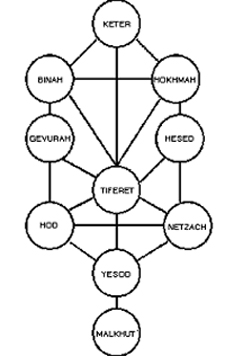
The most famous map of the sefirot shows keter (crown) at the top. Some see keter as a way to begin spiritual practice, an attribute of openness, like a mind emptied in order to receive new ideas. Perhaps students should cultivate keter as they begin a course of study.
The same map places tiferet at the center, as if it is the heart of spiritual practice. Literally, tiferet means “beauty,” but is sometimes translated as “balance” or “truth.” Some say it represents an ideal approach to human relationships, balancing chesed (love) and gevurah (judgment).
When the Ramak (Rabbi Moshe Cordovero, 1522-1570) instructs teachers, he admonishes them to cultivate the attribute of tiferet. On the one side, geuvrah involves the ability to make fine distinctions, organize ideas correctly, and grasp logical implications. On the other side, chesed involves welcoming others.
Psychologist Carl Rogers teaches: offer a relationship in which a person feels affirmed, and they will change for the better. Learning requires both sides blended in tiferet-balance. When a teacher offers appropriate chesed, a student’s gevurah is activated for the best.
The Ramak says, “if you hold yourself to be superior to your student, you cause the energy of the sefirot to flow backwards.” Ideas retreat from the heart, where they can be actualized, back into keter, the empty space of nothingness!
The Ramak’s teaching on tiferet can be stated more simply, using my mother’s straightforward prose. She taught that more experienced, intellectually gifted or culturally comfortable people must adapt to those less so. Teachers must reach out at the learner’s level, and not expect students to already be there.
How can you reach out from within your places of comfort, security and expertise?

I like your Mom’s thoughts. She was a wise woman.