

Power corrupts all—even Jews
Have you read the Biblical book of Samuel? You might know, then, that Samuel the Israelite prophet was not a fan of kings.
People beg Samuel to find them a king. But he resists. “You might think you want a king,” he says. “But you don’t. He will take your sons as soldiers, and your daughters as household servants. He will seize your property and give it to his courtiers. And, thus, you will become his slaves.”
“But we must have a king!” the people say. “So that we can be like other nations!”
So, Samuel anoints Saul, son of Kish—the tallest, handsomest man—to be their king.
The Book of Esther brings Samuel’s warning to life. Power can corrupt those who wield it. No Jew, not even the son of Kish, is immune.
It’s true, some people read Esther differently. They see a story of triumph, rich in reversals and satire. But, this year, I see only a cautionary tale. And that’s how I will retell the story—emphasizing certain plot points, and using imaginative interpretation to connect them.
King Achashverosh flaunts his wealth at an exclusive men’s drinking party. He calls his Queen Vashti to join him and flaunt her beauty. Apparently, she’s another token of his status. Vashti wisely refuses.
Achashverosh is angry. So, he consults his advisors. “She doesn’t want to come?” they say. “Ban her from your presence forever! Take away her royal title and give it to someone else. And make sure other women don’t see her as a role model. Send out a memo requiring all wives to respect their husbands.”
And that’s what the king does. But soon the king is sad. Still, his advisors know just how to make him happy. Find some beautiful young women. Appoint officers to bring them to the harem. Then, he can choose “the best” one and crown her queen.
Do the women come willingly? No, says the narrator. They are “collected” and “taken” to the palace. Esther, too, is “taken” and delivered to Hegai, keeper of the women.
Esther is the adopted daughter of Mordecai, grandson of Kish. Mordecai’s lineage hints at wealth and status. Likely, he is a ranking courtier. And, thus, his daughter Esther is well-placed for a royal marriage.
Hegai, keeper of the women, thinks so too. As soon as Esther arrives, he treats her like royalty, assigning her a team of servants. Hegai knows he must arrange a politically appropriate marriage. But he also knows the king hopes to choose based on his own erotic whims. So Hegai tells Esther exactly what the king likes sexually. And—surprise—the king “chooses” Esther and crowns her Queen.
What happens to the other women who were taken? They are not sent home, no. Instead, they are concubines, kept in the palace. They, too, each spend a night with the king. And, if the king even remembers their name, he might request them again.
Was this rounding up of beautiful sexual slaves a one-off? No—the megillah is clear. It happens again. Even after Esther is crowned Queen.
Shushan, capital city of the Persian empire, is filled with ambitious courtiers. Mordecai is one of many. Once Esther is crowned, he presses his advantage. He visits her at court regularly. One day, he hears of a plot to murder the king. He tells Esther, who tells the king in Mordecai’s name. And Mordecai has now established himself as a loyal aide to King Achashverosh.
Haman is another ambitious courtier. He gains the king’s confidence, and the king relies on him above all others. Haman insists that other courtiers defer to him. But Mordecai refuses. And why not? He is well-placed. After all, he’s the Queen’s adoptive father. But Haman is undeterred. He decides to get rid of Mordecai.
Of course, Haman knows he can’t attack Mordecai directly. So, he works indirectly, manipulating the king with bribery, innuendo, and hate. Haman understands that the king imagines himself all-powerful. And that any crack in the façade of his power drives the king to rage. So, Haman asks permission to do away with a disrespectful ethnic community just as he makes a large “donation” to the king’s account. And the king agrees.
But Mordecai still thinks he has the better hand—his daughter the Queen. So, he asks her to intercede with the king. Not on his own behalf, but on behalf of their entire community.
Esther is reluctant at first. “If I enter the king’s presence uninvited,” she says, “I could be executed. And I haven’t been invited for a month.” (Did he perhaps forget her name?)
So, Esther fasts for three days, meditates, and comes up with her own plan. She will enter the king’s presence to invite him into hers. She will invite both him and Haman—the courtier she hopes to unseat.
Haman is oddly ecstatic, thinking the Queen favors him over her own kin. But of course, she does not. Instead, she exposes Haman to the king. “This man wants to kill me!”
The king executes Haman. He gives Haman’s property to Esther. Then, he gives Esther permission to write new laws protecting her people. So, Mordecai drafts a law allowing Jews—for one day—to kill anyone who attacks them. On that day, Jews kill hundreds, including Haman’s ten sons.
Esther asks the king to put the corpses of Haman’s sons on display. Then, she asks for one more day of killing. The king grants it. On that day, Jews kill thousands. Tens of thousands.
Then they party. And Mordecai, the most favored courtier, becomes very popular—among the Jews, anyway.
It’s not a happy ending. Seventy-five thousand people die. Six hundred or more trafficked women are still enslaved. Royal whims still become law. It’s a corrupt, violent system—and no one works it better than Queen Esther and Courtier Mordecai.
As Samuel taught, power corrupts. No one is immune—not even a grandson of Kish. Nor any Jew.
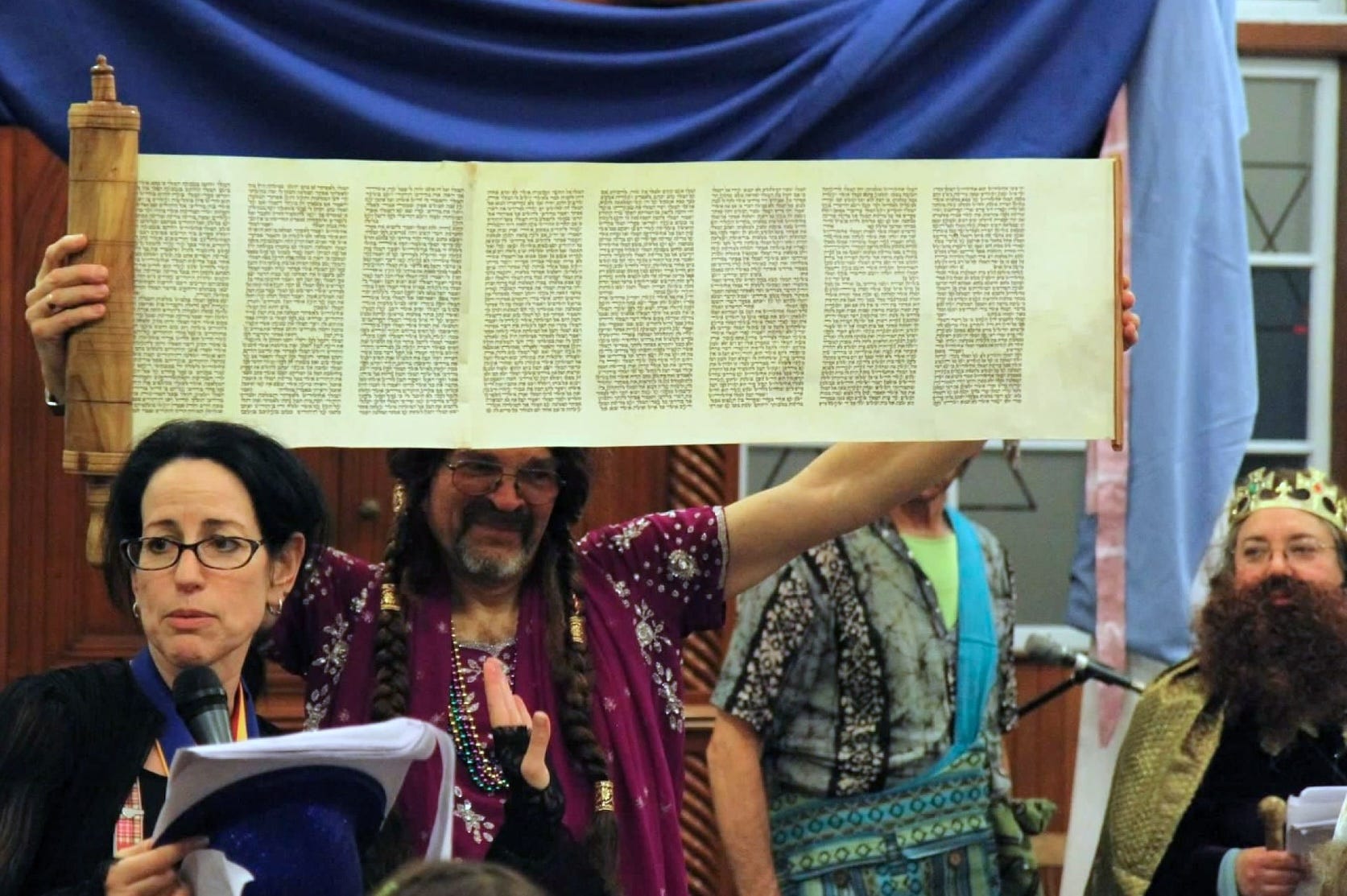
Photo: David Kauffman. Purim at Or Shalom, 2013.
