
The Piaseczna Rebbe on turning intention into daily practice
A teaching from the Piaseczna Rebbe, Rabbi Kalonymus Shapira—filtered through my own life experience and my own midrash.
Let’s say you really, really want to change. You want to become a better person. You cannot accomplish it just by saying, “You know, I think a year from now I want to be a more patient person.” You have to look at: What is the work that you have to do? What would it be like to live as a patient person?
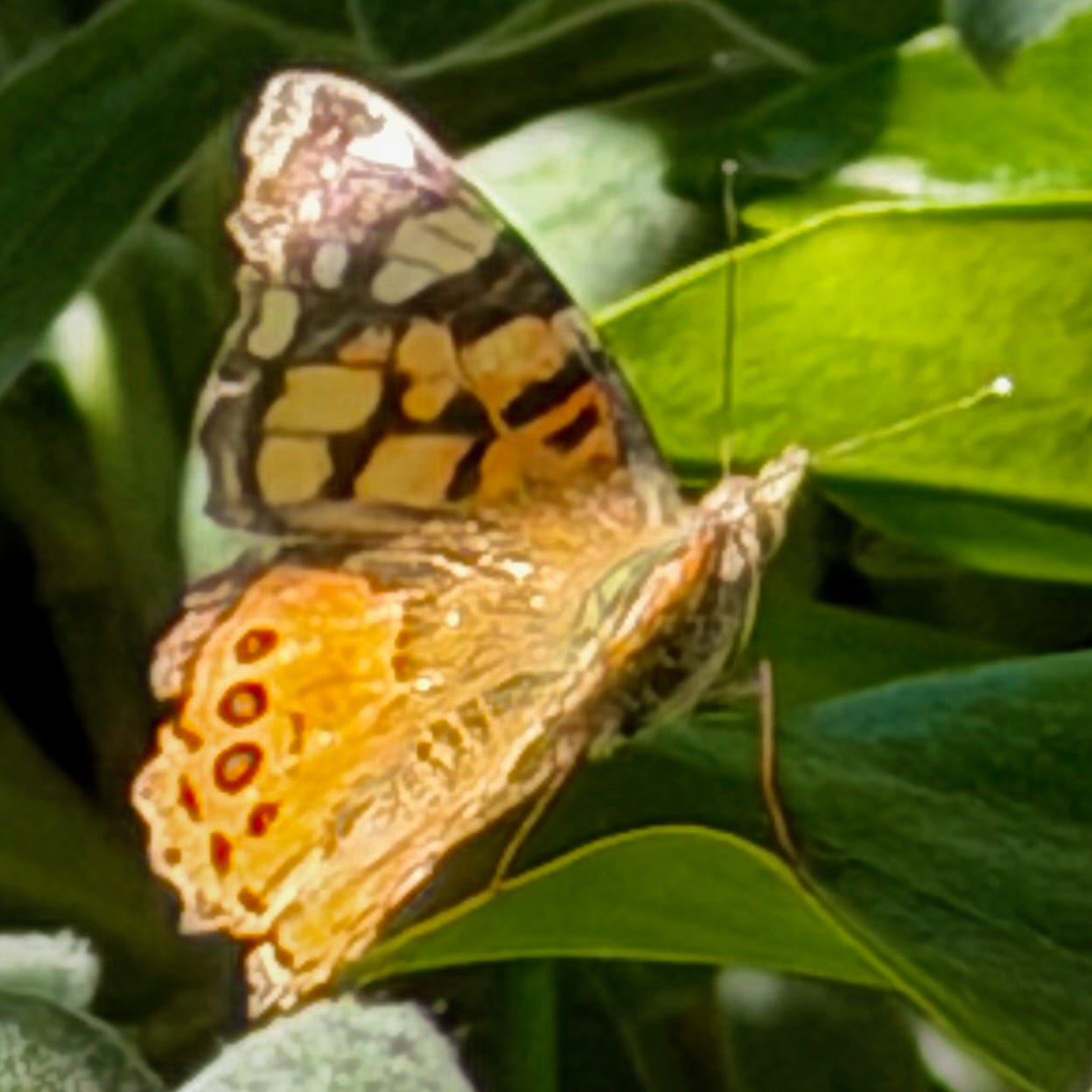
Here is an analogy. If you’re the caterpillar and you want to be the butterfly, don’t just say, “Yeah, one day I’d like to fly around with fancy wings.” Instead ask yourself: How does the butterfly sustain itself? What is its day-to-day practice of adulting?
And here is an example. Let’s say you want to set a goal: “This year, I want to be a person who resists rage bait on social media and doesn’t ever take that rage out on family or friends.”
Then ask yourself: How does a person who resists the rage behave? How do they live every single day?
When they are bored and they want stimulation, what do they do? Do they pick up their phone? Or do they open their window and try to look at a leaf or a bird or a squirrel? Maybe step out their front door and start a conversation with a neighbour?
How does such a person practice calm each day? Do they perhaps start each day with two minutes of slow, deep breathing? Internalize positive thoughts and attitudes to counter the rage? Recite the Thirteen Attributes of Compassion every night as part of their bedtime Shema practice?
What does such a person do when rage bubbles up in them anyway? Do they look at the object of their rage and think, “I care about this person. Let me step back and moderate”?
If you imagine a way of living, you can start to implement it. And then, a year from now, you actually have something concrete to evaluate. Were these the right practices? Did I do them in a good way?
That’s the Piaseczna Rebbe’s invitation to us: if you really want to change, don’t just make a resolution. Remember also to visualize, plan, and evaluate.
The rebbe also anchors his teaching in a bit of Torah. He suggests that Abraham, our ancestor, is our role model.
At first, that suggestion seems odd. Abraham is a deeply troubled person. In fact, our Torah readings for the first and second day of Rosh Hashanah showcase how dysfunctional he really is.
Abraham finally, finally leaves his father’s house—literally and metaphorically—when he is 70 years old. That is a long time to live in your father’s shadow! Abraham’s father must have been so controlling.
Abraham travels with his troubled nephew Lot. But he never holds Lot accountable. Instead, Abraham repeatedly rescues Lot. Yet Lot never changes, and their relationship never improves.
Because he can’t navigate family conflict, Abraham nearly causes the death of his older son. And because of a deep spiritual confusion, he nearly causes the death of his younger son.
And yet, just a few chapters later, the Torah tells us that Abraham remarries and successfully raises six sons.
How does Abraham do that? Does he just wake up one day and say, “I’m going to be good at family now”? And suddenly he is?
No, says the rebbe. Elder Abraham actively works on himself every day.
The Torah says Abraham zaken ba bayamim (Gen. 24:1). Ba bayamim is a Hebrew idiom. It means “well along in years”— a tasteful way of saying someone is quite elderly.
But, taken literally, the phrase tells us something about how this elder lives. Ba means “arrive.” Bayamim can mean “in the days”—each and every one. This elder arrives anew each day. Through intentional daily spiritual practice, they continue to evolve.
That, suggests the Piaseczno, is how Abraham changed. He took on the journey of recovery from family trauma. And he attended to it each and every day.
Change is possible. One path is the Piaseczno’s four-step method. (1) Ask yourself, “Who do I want to become?” (2) Imagine that person’s daily spiritual practice. (3) Take it on, as best you can. (4) Evaluate the practices and your engagement with them.
It’s not magic, not a miracle. Just a lot of hard work. But the Piaseczna Rebbe would want us to know that each and every one of us can do it.
A more scholarly version of this essay is in the bookReturning Higher: Hasidic & Neo-Hasidic Inspiration for the High HolyDay Journey. Edited by Or N. Rose and Aubrey L. Glazer (Panui Press, 2026), 43-46.
